A small roastery that likes color.
Pigment started with one 12 kg roaster in a Portland garage, and an argument that coffee bags did not have to be brown.
How we buy
We buy a few lots a year from producers we have met, and we buy the whole lot, so the farm knows what it will earn before harvest.
Each coffee's page lists the producer, altitude and process. If we do not know something, we do not print it.
How we roast
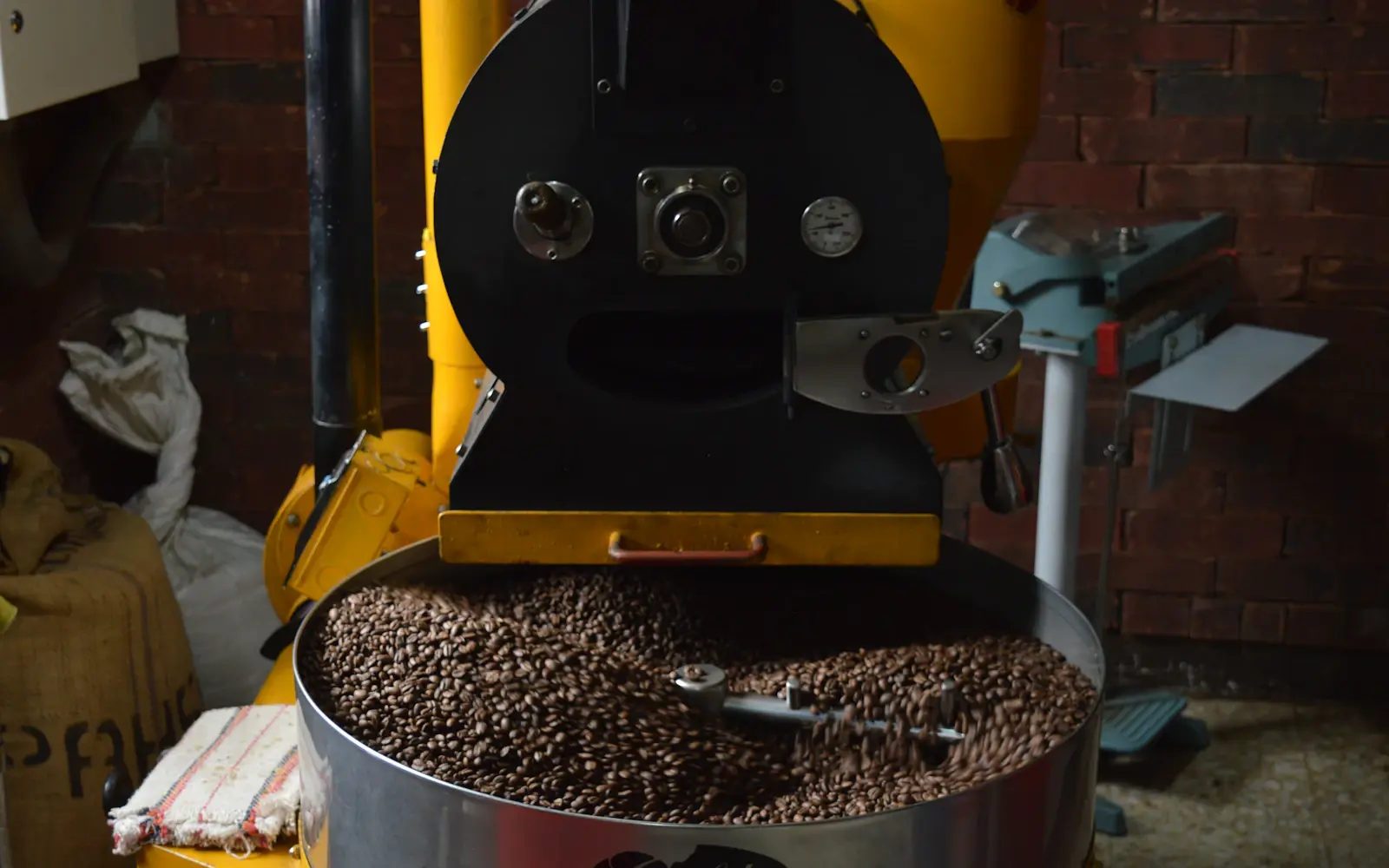
We roast twice a week in batches of 12 kg or less, and taste every batch before it goes into a bag. Light roasts are developed just enough to be sweet; dark roasts stop well before they turn to ash.
Every bag is packed the morning after roasting, and ships that day.
How we pack
Our bags, valves and labels are compostable, and the boxes are recycled card. You will not find plastic anywhere in an order.
Where the coffee comes from
| Coffee | Country | Producer | Altitude | Process |
|---|---|---|---|---|
| Guji Natural | Ethiopia | Shakiso smallholder cooperative | 2,000–2,200 m | Natural, raised beds |
| Huila | Colombia | 22 families, Asociación Café del Sur | 1,700–1,900 m | Washed, sun-dried |
| Huehue | Guatemala | Finca La Esperanza | 1,800–2,000 m | Honey |
| Nyeri | Kenya | Gatomboya cooperative | 1,750–1,900 m | Washed, double soaked |
| Cerrado | Brazil | Fazenda Santa Luzia | 1,050–1,200 m | Natural |
| Half Light Decaf | Colombia | Cooperativa Tolima Sur | 1,600–1,800 m | Washed, sugarcane decaffeinated |